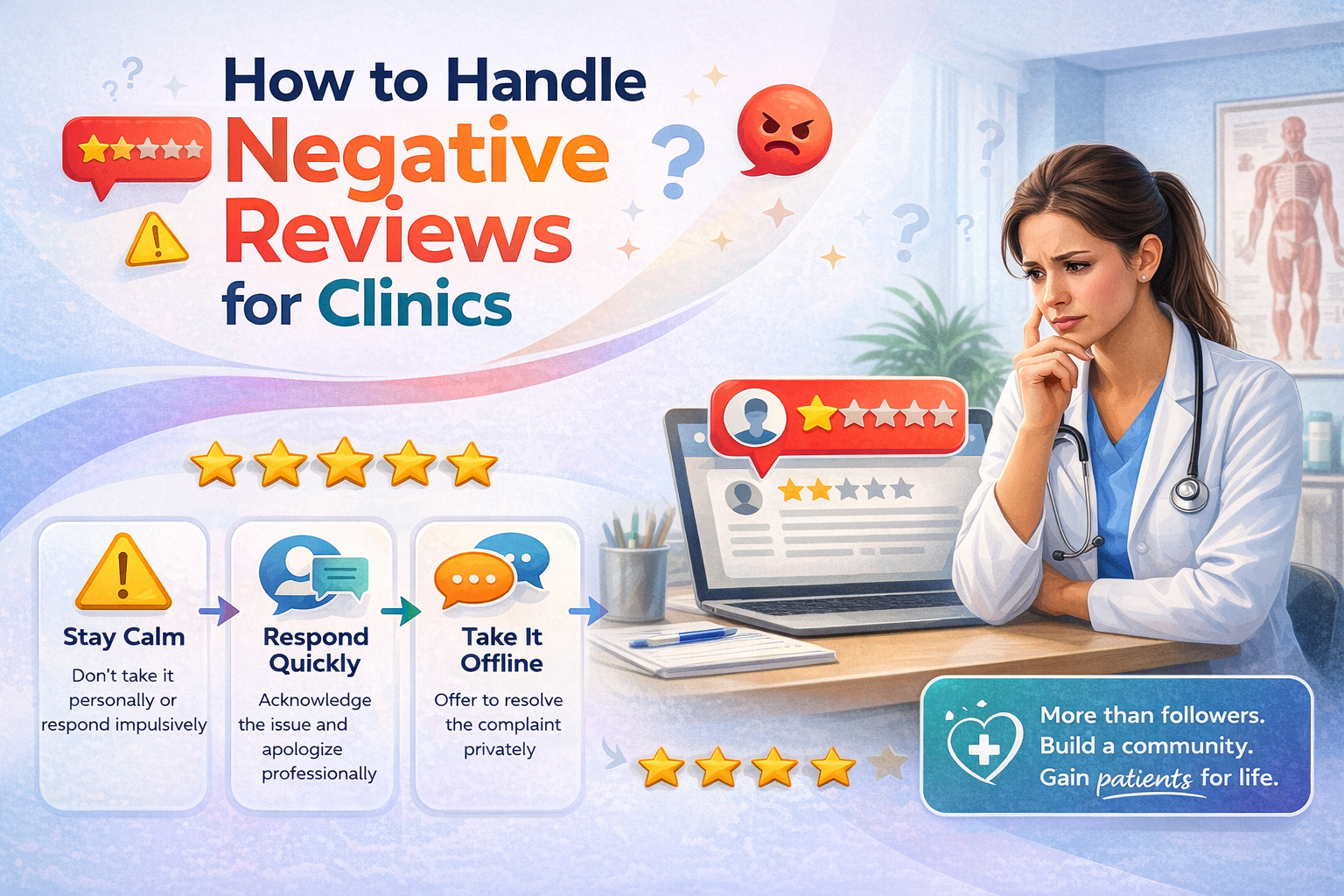
Negative reviews are one of the biggest concerns for clinic owners. A single bad review on Google can influence how potential patients perceive your clinic, often before they even visit your website or contact you.
However, negative reviews are not always harmful. When handled correctly, they can actually strengthen your reputation, build trust, and even bring in more patients.
This guide explains how clinics can respond to negative reviews professionally and turn them into an opportunity for growth.
Why Negative Reviews Matter More Than You Think
Most patients read reviews before choosing a clinic. A profile with only perfect ratings may even look suspicious, while a mix of positive and negative reviews appears more authentic.
What truly matters is not the negative review itself, but how you respond to it. A professional and empathetic response shows that your clinic values patient feedback and is committed to improving the patient experience.
In many cases, your response is more important than the review.
Stay Calm and Do Not Respond Emotionally
Receiving a negative review can feel personal, especially when your clinic works hard to provide quality care. However, responding emotionally or defensively can damage your reputation further.
It is important to take a step back and approach the situation calmly. Avoid arguments, blame, or justifying your actions publicly. Remember that your response is not just for the reviewer, but for every potential patient who reads it.
A composed and respectful tone reflects professionalism and builds trust.
Respond Quickly and Professionally
Timely responses show that your clinic is attentive and values patient concerns. Ignoring reviews or responding after a long delay can give the impression that feedback is not taken seriously.
A good response should acknowledge the concern, express empathy, and offer to resolve the issue offline. Even if the complaint seems unfair, maintaining professionalism is essential.
For example, a simple response that thanks the reviewer, acknowledges their experience, and invites them to discuss the issue privately can make a strong impression.
Take the Conversation Offline
Patient confidentiality is critical, and detailed discussions should never happen in public review sections.
After acknowledging the issue, encourage the reviewer to contact your clinic directly through a phone call, email, or WhatsApp. This allows you to understand the situation better and resolve it effectively.
Moving the conversation offline also shows other readers that you are proactive in addressing concerns without exposing sensitive information.
Identify Genuine Feedback vs. Unfair Reviews
Not all negative reviews are the same. Some provide valuable feedback that can help improve your services, while others may be exaggerated or even fake.
For genuine complaints, use the feedback constructively. Look for patterns in reviews to identify recurring issues, whether it is long waiting times, communication gaps, or service quality.
For suspicious or fake reviews, you can report them to the platform. However, even in such cases, responding politely demonstrates professionalism to anyone reading.
Use Negative Reviews to Improve Your Clinic
Negative feedback can highlight areas that need attention. Instead of viewing it as criticism, treat it as insight into the patient experience.
Improving internal processes, training staff, and enhancing communication can reduce future complaints and improve overall satisfaction.
Clinics that actively learn from feedback tend to build stronger reputations over time.
Encourage Positive Reviews to Balance the Impact
One negative review can stand out if there are only a few total reviews. The best way to manage this is by consistently encouraging satisfied patients to leave positive feedback.
Make it easy for patients to share their experience by providing direct review links after appointments. A steady flow of positive reviews not only improves your rating but also builds credibility.
Over time, this reduces the impact of occasional negative feedback.
Create a Review Response System
Handling reviews should not be random. Clinics benefit from having a structured system in place.
Assign responsibility to a team member, define response guidelines, and ensure consistency in tone and messaging. Quick and professional responses should become part of your daily operations.
This ensures that no review is ignored and every interaction reflects your brand positively.
Common Mistakes Clinics Should Avoid
One of the biggest mistakes is ignoring negative reviews altogether. This signals a lack of concern for patient feedback.
Responding defensively or arguing with patients publicly can harm your reputation. Sharing patient details in responses is also a serious mistake that can lead to privacy issues.
Another common issue is using generic responses that feel impersonal. Each review should be addressed thoughtfully to show genuine care.
Conclusion
Negative reviews are an unavoidable part of running a clinic, but they do not have to damage your reputation. In fact, they can become an opportunity to demonstrate professionalism, build trust, and improve your services.
Patients are not looking for perfection. They are looking for transparency, responsiveness, and a clinic that genuinely cares about their experience.
By responding calmly, resolving issues effectively, and continuously improving, clinics can turn negative reviews into a powerful tool for growth.